
Our feeding calculator is designed to provide a starting point for feeding your dog a balanced raw diet. Every dog is unique, so the recommended amounts may need to be adjusted based on your dog’s age, activity level, metabolism, and body condition.
Important Note
The calculator provides a guideline only. Monitor your dog’s weight, body condition, energy levels, and overall health, and adjust feeding amounts as needed. Puppies, seniors, working dogs, pregnant or lactating bitches, and dogs with specific health conditions may require individual adjustments.
If you are unsure about your dog’s feeding requirements, please contact Totally RAWsome and we’ll be happy to help you determine the most suitable feeding plan.
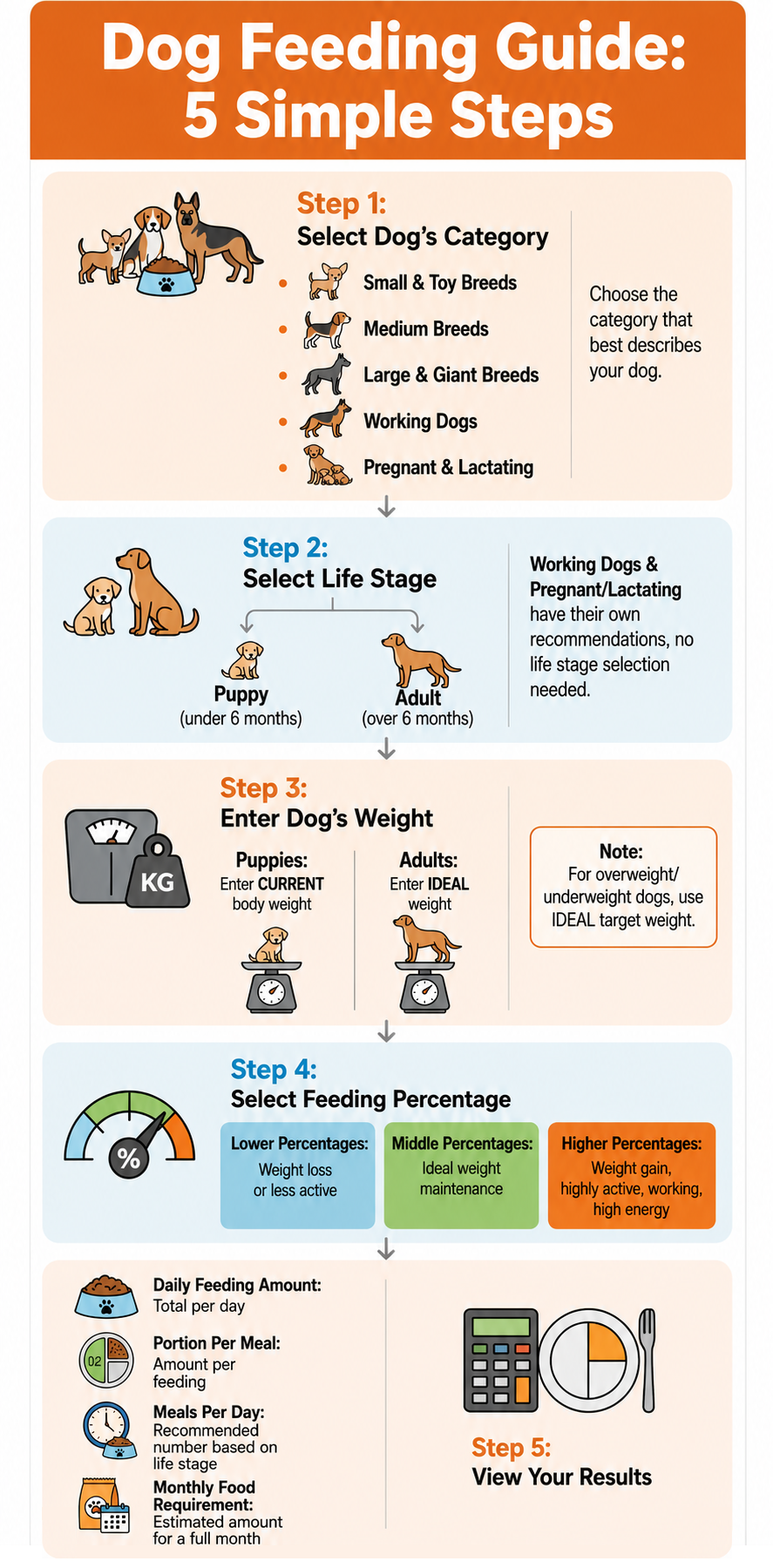
Understanding Feeding Percentages
One of the most common questions we receive is, “What percentage should I feed my dog?”
The percentages used in our calculator are based on a dog’s body weight and are intended as a starting point for feeding a balanced raw diet. Every dog is different, so the ideal amount will vary depending on age, activity level, metabolism, body condition, and overall health.
Puppies Need More Food
Growing puppies require more energy and nutrients than adult dogs, which is why they are fed a higher percentage of their body weight.
As a general guideline:
- Small Breed Puppies: 5% – 10% of body weight
- Medium Breed Puppies: 4% – 8% of body weight
- Large Breed Puppies: 4% – 8% of body weight
Most healthy puppies do well on the default percentage shown in the calculator. Monitor your puppy’s growth and body condition regularly and adjust if necessary.
Adult Dogs Need Less Food
Once a dog reaches adulthood, their growth rate slows and their food requirements generally decrease.
As a general guideline:
- Small & Medium Breed Adults: 2% – 5% of ideal body weight
- Large & Giant Breed Adults: 2% – 4% of ideal body weight
For most adult dogs at a healthy weight, the default percentage in the calculator is a good starting point.
Using Ideal Weight
If your dog is overweight or underweight, always use their ideal weight rather than their current weight.
For example:
- If your dog currently weighs 35kg but should weigh 30kg, calculate using 30kg.
- If your dog currently weighs 20kg but should weigh 25kg, calculate using 25kg.
This helps prevent overfeeding or underfeeding while working towards a healthy body condition.
When to Use Lower Percentages
Consider feeding towards the lower end of the range if your dog:
- Is overweight
- Has a low activity level
- Is a senior dog with reduced energy requirements
- Gains weight easily
When to Use Higher Percentages
Consider feeding towards the higher end of the range if your dog:
Consider feeding towards the lower end of the range if your dog:
- Is underweight
- Is very active
- Participates in agility, hunting, herding, or working activities
- Has a naturally high metabolism
- Is a working dog
- Is pregnant or lactating
Working Dogs
Working dogs have significantly higher energy requirements and may require between 5% and 10% of their ideal body weight depending on workload and intensity.
On heavy work days, higher feeding percentages are often appropriate.
Pregnant & Lactating Bitches
Pregnant and nursing mothers require additional calories to support developing puppies and milk production.
A feeding range of 6% to 10% of body weight is generally recommended, with food divided into smaller, more frequent meals.
Watch the Dog, Not Just the Bowl
The calculator provides an excellent starting point, but the most important indicator is your dog’s body condition.
You should be able to:
- Feel the ribs without pressing hard
- See a visible waist when viewed from above
- Observe good muscle tone and energy levels
If your dog is gaining unwanted weight, reduce the percentage slightly. If your dog is losing weight or appears hungry and lean, increase the percentage slightly.
Every dog is unique, and small adjustments over time will help you find the perfect feeding amount for your individual dog.